Why Grant Cycles Break Normal Software Roadmaps
Funding cycles end, but software needs never do—plan for maintenance before launch.
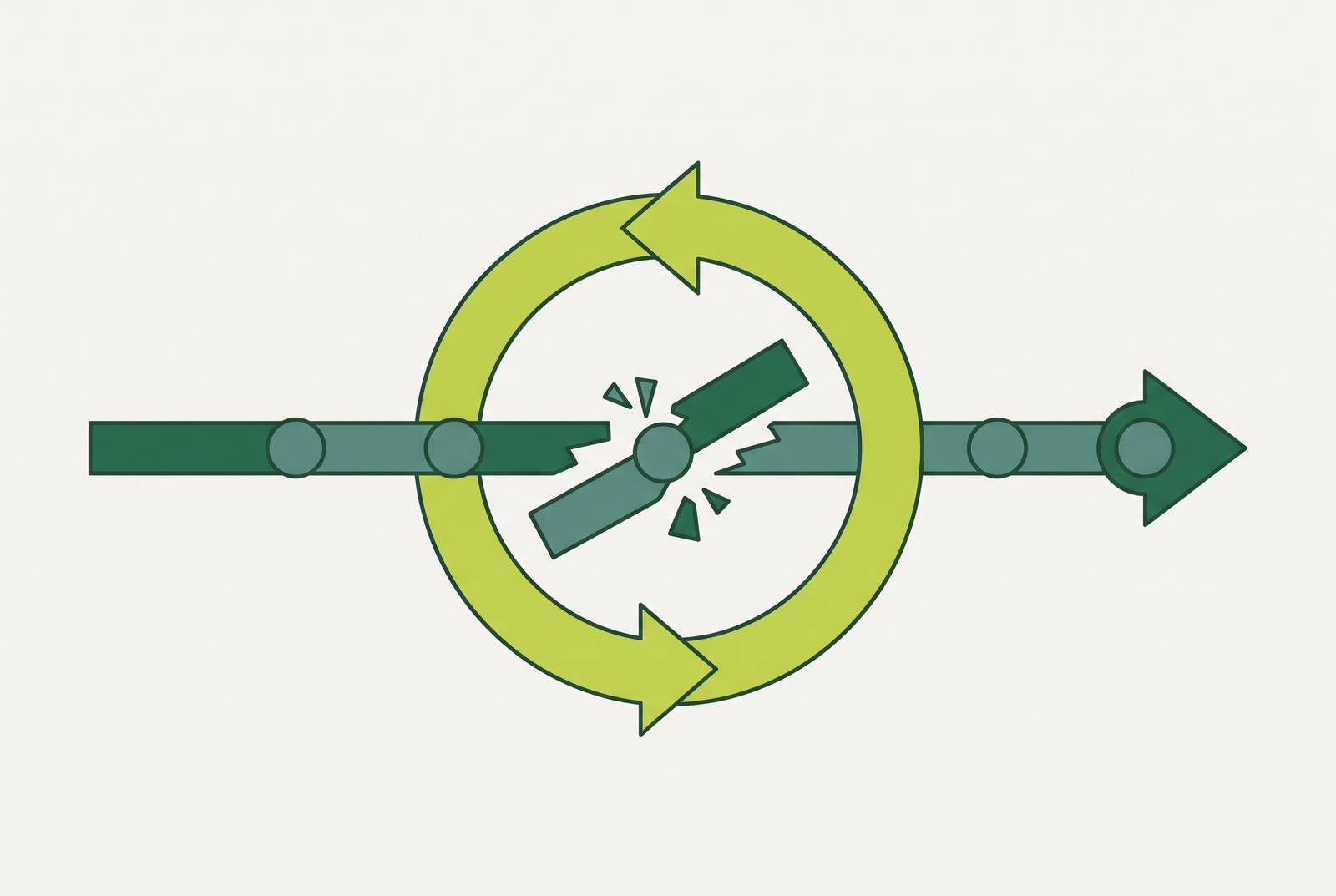
Grant cycles break normal software roadmaps because they fund a delivery window, while software needs care beyond it. For nonprofit teams with constrained budgets, the right product engineering partner plans for that gap through stand-alone phases, grant-aligned billing, and ongoing stewardship. A lower build price alone does not solve the problem.
Why grant cycles and software lifecycles operate on different logics
One nonprofit received a technology grant and spent more than a year building a tool. By launch, the program had ended, so the team never adopted it. Another nonprofit did not receive the grant at all. Both ended up using paper registers and Excel. The funded organization had gained software, but not a lasting way to use it.
The funder wanted to help, and the organization wanted the tool. Yet the grant tested whether something could be built within a funded project, leaving the organization’s ability to run it afterward untested. That distinction explains the failure better than poor planning or too little money alone. A program can end while its software still needs care.
Ask three questions before funding begins. Does the program actually need software to scale? Can the organization manage a vendor or build the product? Can it keep the system alive after the grant closes? Each question tests a different dependency, and skipping any one leaves the grant paying for an outcome the organization may be unable to sustain.
How technology gets classified in a grant budget — and why that classification determines what survives
A grant budget does more than allocate money. It decides which kinds of work can qualify for support. When technology sits under administration rather than program delivery, it competes with staff salaries instead of being treated as part of the service itself. The budget can therefore favor another person doing routine work over a system that would reduce that work.
Bridgespan describes a cycle in which funders pressure nonprofits to keep overhead unrealistically low, while nonprofits underreport what they actually spend. Those reports then reinforce the expectation of lean overhead. The classification becomes difficult to challenge from either side. A nonprofit leader described the practical difference plainly. A flexible funder allows line items to shift toward software, while a strict one makes another staff member easier to request than a system.
Restricted-use rules tighten that trap after an award. A grant may pay for development while excluding staff training, infrastructure, or the engineering labor needed to keep the result running. The tool can launch without an organization equipped to maintain it. Available money is not necessarily usable money. Flexibility in budget classification is therefore a condition of survival.
Why building is always fundable and maintenance never is
Most technology grants favor the moment of creation. A build offers a defined scope and an endpoint that fit a grant cycle, while maintenance extends beyond both. That leaves the organization responsible for recurring work that the original award did not cover. The way the grant funds the work creates this problem before anyone chooses a programming language or estimates a feature.
AI can produce more code more quickly for the same money, but generating code has always cost less than running and maintaining software from year two onward. More software can mean more software to look after. Without a matching provision for ongoing care, the apparent saving makes the maintenance gap proportionally larger.
Nonprofits may read a technology grant as a mandate to build, and funders sometimes explicitly favor a unique product. Custom development can be the right choice for a niche problem. For data management, CRM, or analytics, however, rebuilding an existing solution can leave the nonprofit with a more fragile system that only it will maintain. Fixed timelines then compound that choice by requiring waterfall-style commitments before requirements are clear, even though good outcomes depend on room to adapt.
What the grant lifecycle actually demands from a software roadmap
Before engineering begins, the award creates an administrative workload. The grant lifecycle spans pre-award, award & acceptance, implementation, reporting, closeout, and post-award stewardship. Each phase has its own deadlines and records that the team must keep. Reporting windows, allowable-spend categories, milestone records, and closeout procedures all run on the funder’s calendar. A software roadmap has to accommodate those obligations.
The Notice of Funding Opportunity previews those commitments. Its reporting cadence, spending rules, and required data collection shape how manageable an award will be. Once accepted, a funder’s deadline is a hard external constraint. Reports also need to connect project progress to the specific deliverable language in the grant. If the project record leaves out that link, the team has to piece it together when writing reports.
A compliance review can be missed or post-award setup delayed because the right prompt did not arrive at the right time. AWS Imagine Grant illustrates the separate clock that funding imposes. Its 2026 round opened March 19, 2026, closed June 5, 2026, and scheduled results for mid-November. Defined scopes and budget thresholds sit within that annual cycle, leaving teams waiting for a funding decision while the next phase remains uncertain.
How platform decisions made under one grant create roadmap breaks in the next
A platform choice creates obligations beyond the funded build. Those obligations can arrive when the provider changes direction, independently of the nonprofit’s ability to pay for a response. The original funder has no obligation to pay for that transition. As a result, even a successfully delivered project can leave a migration burden for a later grant that never anticipated it.
Salesforce illustrates the distinction between support and product direction. It launched Nonprofit Cloud, now Agentforce Nonprofit, while confirming that Nonprofit Success Pack will continue to be supported. But the money for new product work goes into Agentforce Nonprofit. Moving from NPSP involves a new org, manual data migration, and fresh integrations. Continued support prevents this from being an immediate forced move, but it does not remove the future roadmap decision.
Fragmented stacks widen that exposure across the organization. Separate tools for grants, donor management, finance, and programs create reporting friction and technical debt that no single grant was designed to address. Wipfli’s 2026 nonprofit trends analysis names outdated systems as a top challenge because slow workflows and fragmented data make it harder to show results, review finances, and serve constituents. Coordinating the upkeep of several tools is difficult when each was funded within a different delivery window.
What self-hosted and open-source tools offer — and what they cost that grants rarely cover
Open-source and self-hosted tools offer a genuine alternative to platform dependency. They can give nonprofits more control over data and costs, especially when SaaS subscriptions become difficult to cover under restricted grants. Airtable, for example, is used for beneficiary tracking, program management, and grant reporting, but scaling costs at its Team and Business tiers can push teams toward alternatives. The trade is not simply paid versus free. Self-hosting moves operational responsibility to the organization’s staff or contractors.
Baserow offers an Airtable-like database builder that can be self-hosted, while another tool combines spreadsheet and database functions. NocoDB turns an existing MySQL, PostgreSQL, SQL Server, SQLite, or MariaDB database into grid, Kanban, gallery, and form views with a REST API. It assumes the database is already there. SeaTable is positioned for organizations with GDPR requirements and also offers self-hosting, while Supabase fits the move to a real SQL database.
All of these choices still leave teams with infrastructure to run. Deployment and maintenance still need skilled people, and a restricted grant rarely makes it easy to pay for that work. Data sovereignty can also be a funder requirement, making self-hosting both a compliance decision and a cost choice. The Gadfly Project offers an instructive exception through in-kind support that uses its own expertise to complete software projects. It pays directly for engineering work, covering the need for skilled people that a free software license leaves unmet.
How roadmaps can be structured to survive grant cycles rather than be broken by them
The practical response is a roadmap whose phases can each stand alone if the next grant does not arrive. Funding windows become constraints the plan works backward from. Each phase needs a useful stopping point. Otherwise, the nonprofit can complete every promised milestone and still hold a product whose value depends on an unfunded next step.
That structure extends into the engineering partner relationship. Invoicing should align with grant dates or milestones, while project documentation should make funder reporting a byproduct of development. The plan also needs capacity for mid-project amendments when timelines shift. These operating requirements connect the roadmap to the actual conditions under which the organization can spend and report.
The Patrick J. McGovern Foundation’s 2026 awards include $500,000 to inSupply Health for AI-powered supply chain tools in national health systems across East Africa, and support for Trek Medics International’s AI-enabled emergency dispatch infrastructure. Those examples do not establish unrestricted terms for either award. IBM Sustainability Accelerator gives a clearer example of helping teams over time through a two-year program with platform access and technical mentorship. These opportunities are exceptions with limited availability.
Would better grants solve more than better roadmaps? Multi-year unrestricted funding would address the root mismatch more directly, but waiting for funders to change is not a workable plan. Grant reform and grant-aware engineering can proceed together. Shared platforms also require caution because the loss of one funder’s interest can affect every nonprofit using the tool at once. Their governance may favor the organizations contributing the most money, so shared ownership does not automatically produce a shared roadmap.
How can a small nonprofit find an engineering partner that understands grant-constrained roadmaps?
A typical software shop can build software that works well and arrives on time without planning for what happens when funding ends. A values-aligned partner treats stewardship beyond launch as part of the project. That is the relevant comparison for nonprofit teams whose budgets cannot absorb an unexpected handoff or unfunded rebuild.
The evidence lies in how the partner plans. Invoices that fit the grant, records that can be used in reports, and a willingness to change scope when funding shifts are ways to judge whether a partner fits. So is an understanding that limited budgets, mission-first decisions, and staff holding several roles shape delivery. A six-month runway is a real constraint. A partner who treats it as a negotiating position has misunderstood the conditions under which the product must survive.
Once real users arrive, a system that was good enough for the grant window may need work that the award never anticipated. Technical debt at that stage is not a moral failing, but a predictable consequence of building under constraints. The time to address it is when people begin depending on the product, regardless of when another grant makes it fundable. A good partner helps keep that work in the roadmap, even when the grant’s rules treat the project as finished.