Why Founders With Post-PMF Traction Hire Engineering Studios Over Freelancers to Fix AI-Generated Code
Sustained ownership matters more than code quality when rebuilding AI-generated systems.

For a post-MVP rebuild of an AI-generated or freelancer-built codebase, an engineering studio is the stronger fit when the work requires whole-system accountability and ownership after delivery. A freelancer remains a good fit for a bounded repair. The ability to sustain the context needed to keep a product reliable after paying users depend on it matters more than who writes better code.
What post-PMF actually means for your codebase
Before product-market fit, the engineering task is to make an idea testable. Shipping something that shows whether people want it can be worth more than making every part last. But once the product gains traction, users need those parts to work together. A broken flow can permanently lose a paying customer. Reliability becomes a constraint on growth, rather than something the founder can put off until the idea proves itself.
New features keep touching the same brittle files, app logic lives inside tools the founder does not control, and explaining the data flow no longer fits into one whiteboard session. The best engineering hours go to patches. These are not simply signs that the software needs tidying up. They show that maintaining the existing product is competing with the work traction was supposed to make possible.
That competition also changes the cost of the founder’s time. A domain expert doing enterprise sales or a CEO who is raising funds has to give up other work to deal with engineering firefighting. The relevant cost is therefore not just the repair bill. It includes the sales and fundraising hours spent managing the repair.
Why AI-generated codebases carry a specific kind of structural debt
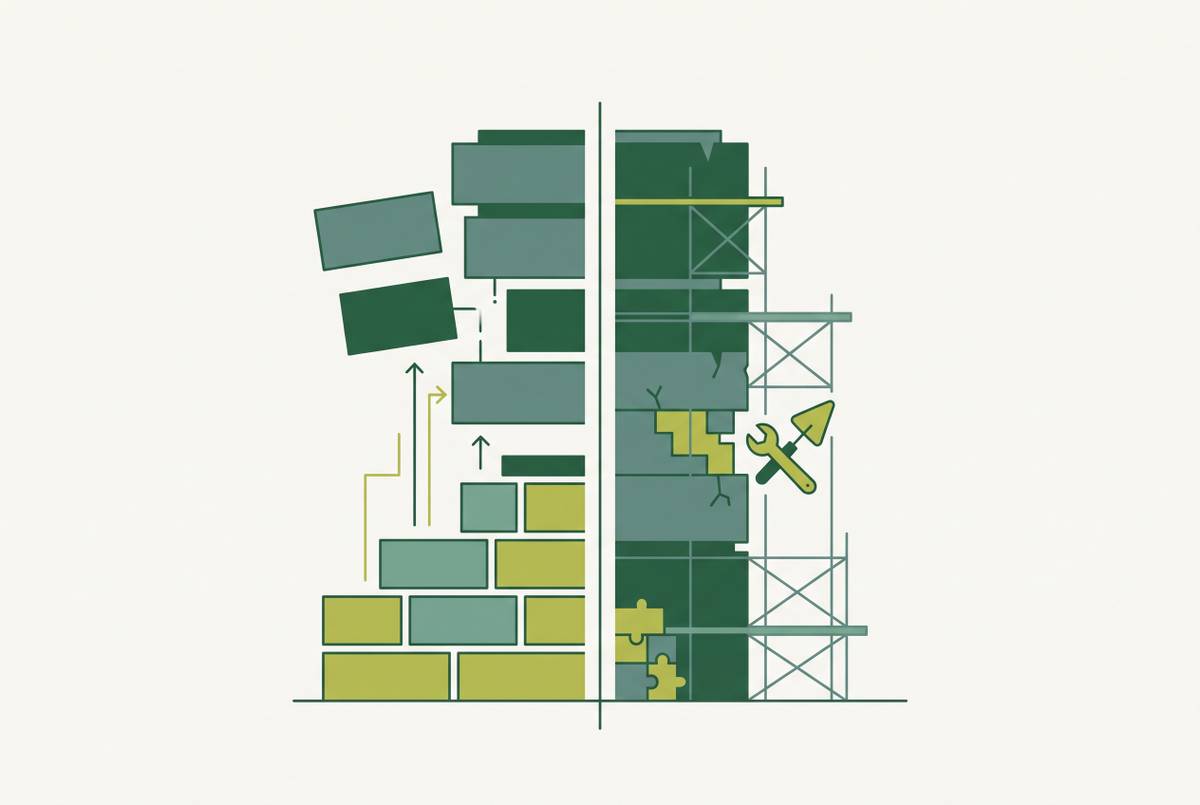
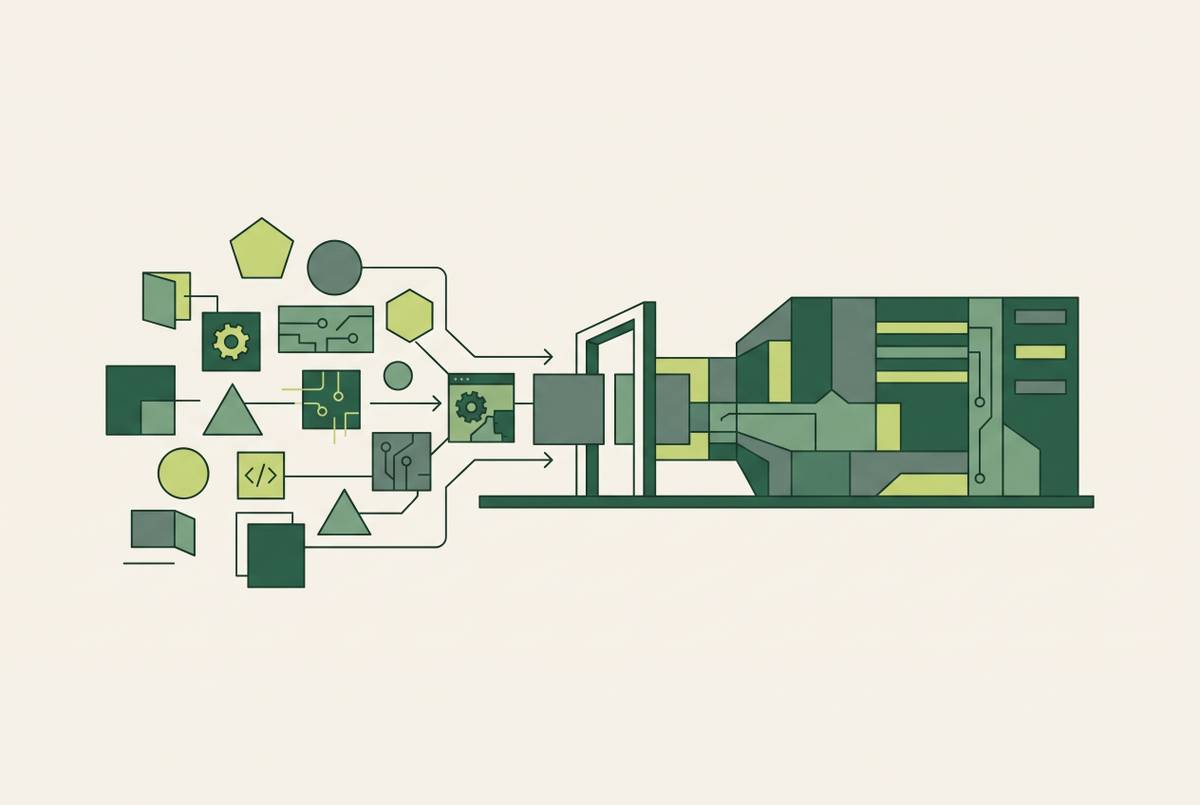
What makes an AI-generated MVP different from any other hurried first build? The distinction is the gap between production and verification. AI tools accelerate code generation, but that does not mean the resulting system has been reviewed at the same pace. One prompt iteration after another can create pieces that work without a shared design to tie them together. That gap creates structural risk.
Users can feel the effects of duplicate logic. Where a shared helper would belong, different implementations can leave different code in charge of the same behavior in different places. The engineer must establish where that behavior exists, rather than assume that fixing one implementation resolves it throughout the product. When code style changes across prompt iterations, it gets harder to understand how those pieces relate.
The same fragmentation can reach the data model. Columns get added without reconsidering the overall structure, while foreign keys and indexes may be missing. At small scale, weaknesses can remain unobtrusive. When the system gets more use, a slow database query can bring it down. The debt compounds because the product is asking more of foundations that were never assessed as a whole.
Inconsistent error handling and partial observability integrations make that assessment harder once failures occur. A feature must work during a demonstration, and its failure must be understandable in production. In the Moltbook incident, a misconfigured database exposed API tokens and user email addresses. The application logic did not have to be wrong for users’ information to become accessible.
This is why a post-MVP rebuild cannot begin with the assumption that every problem is a local coding mistake. Some defects may be bounded, but others come from decisions shared across the system. Those decisions need an owner beyond the patch. Otherwise, the next feature can inherit the same unexamined assumptions that made the current repair necessary.
What freelancers can and cannot structurally provide
A skilled freelancer can be an excellent choice when the task has clear boundaries. A contained module or a well-scoped repair gives both parties a deliverable they can understand and assess. The mismatch begins when the brief is effectively to keep a changing product reliable, secure, and understandable indefinitely. That responsibility does not end when one module is delivered.
Could a strong freelancer stay long enough to learn the whole system? Yes, an individual can develop deep knowledge. The structural distinction is whether that knowledge remains personal or becomes institutional, supported by an engagement that owns the system after delivery. A solo contractor’s expertise does not, by itself, provide that organizational continuity. When engagements change, the next person has to reconstruct context before making dependable decisions.
A founder might reasonably answer that good management can close the gap. Clear scopes, careful handoffs, and coordination can make independent engagements useful. But someone has to do that work. For a founder already needed in sales or fundraising, the management burden is part of the price, even when it never appears on a contractor’s invoice. The comparison turns on whether the founder can afford to remain the person joining everything together.
Security and compliance make the boundary especially visible. Work on a contained module from a personal device does not establish an audit trail proving SOC 2 compliance or create a whole-system HIPAA arrangement through a BAA. A founder going through enterprise procurement needs a partner who can take responsibility for the system being reviewed and its documentation.
Why sustained context is the actual differentiator at production scale
Sustained context means knowing why a decision was made, what it constrains, and how to monitor for its failure. It is more than familiarity with the files. A studio that remains responsible across iterations can accumulate that knowledge as part of its work, rather than repeatedly reconstruct it at the start of a new engagement. That is the positive case for the model. It joins delivery to the consequences of delivery.
For an AI product, those consequences can include changes in evaluation results between versions and the effects of user behavior on system performance. Architectural decisions also shape what the product can support next. Understanding those relationships takes context across releases. An engineer assessing quality degradation needs more than the latest code if the explanation lies in an earlier decision or a changed assumption.
Handoff documents help, but they do not fully reproduce that history. Each time a new freelancer comes in, sharing knowledge starts over, while a studio that stays can keep building its map of the system. That continuity changes the scope of accountability. The team is responsible for getting a change accepted and understanding how it behaves during maintenance, which is particularly useful when a rebuild must support a product that already has users.
Why not hire an in-house team instead? If the product is the company’s only technical moat, that is the serious long-term answer. A studio should serve as a temporary bridge. It can provide engineering ownership before the founder is ready to raise on momentum, hire on track record, or build an internal team. Rebuilding on sound foundations and staying through maintenance can create the conditions for that transition.
None of this follows automatically from the word “studio.” Weak engineers with AI tools can still produce weak output faster, and finding an AI-native team with production discipline is difficult. The label proves very little on its own. For a founder evaluating a partner, the useful evidence is whether its operating structure supports continuing ownership, architectural judgment, and documentation acceptable to an enterprise buyer. A sales promise of continuity is not the same as an engagement built around it.
How this plays out for nonprofit founders and Airtable-dependent operations
Nonprofit founders can reach the same inflection with less room to absorb the cost. An Airtable base or an AI-built tool may keep operations running until it needs someone to take engineering ownership to maintain it, beyond what more configuration can do. The budget does not make the underlying dependencies simpler. Staff may already hold several roles, so managing a fragmented repair also competes with the work the platform exists to support. A poor choice of partner can cost mission momentum as well as money.
Airtable’s payment limitation makes the dependency concrete. It has no native payment processing, so accepting a donation requires third-party integrations and additional technical setup. When essential operations depend on those connections, replacing the interface alone does not settle who owns the data flow or maintains the integrations. Engineering ownership must cover the whole operation, including the tool visible to staff.
The other tools serve different needs, so there is no single ranking from worse to better. Retool fits teams led by engineers that want to replace an Airtable base with a well-built internal application and expect developers to maintain it. It does not remove the maintenance obligation. Its fit depends on whether an engineering-led internal application is what the organization needs and can support.
NocoDB offers a different route centered on data ownership, using Node.js, Vue, and TypeScript. NocoDB’s official documentation states that it is transitioning from AGPL-3.0 to a Sustainable Use License based on Fair-Code principles as of January 09, 2026. That licensing context belongs in the assessment. Data sovereignty and the terms of the chosen platform shape the architecture and still matter after a migration is done.
Zeffy, by contrast, is fundraising tooling trusted by a large base of nonprofits and provides native capabilities that Airtable requires integrations to approximate. That makes the purpose of the replacement decisive. An organization that needs help with fundraising has different needs from one rebuilding a general internal application. Neither choice eliminates the need to judge how operational data and integrations fit together over time.
For a nonprofit founder, values alignment therefore has a practical meaning. It includes whether the partner understands limited budgets, staff with overlapping responsibilities, and decisions shaped by the mission. Staying after delivery is part of that fit. A transient engagement may complete a migration while leaving the organization to manage consequences that outlast it. The stronger relationship accounts for who will own those consequences when the project is no longer new.
How to tell whether you need a studio now or later
For a founder applying this comparison, the first question is whether the work has a dependable boundary. If the task is contained and the surrounding system is understood, a freelancer may be the appropriate choice. A studio is not automatically the next step. The stronger case emerges when repair, architecture, monitoring, and maintenance cannot be separated without leaving the founder responsible for the connections. Company size and budget alone do not resolve that distinction.
Repeated changes to brittle files and an unexplained data flow point to a need to assess the system. Enterprise security documentation adds an organizational requirement. When there are paying users and no technical co-founder, someone needs to keep owning the technical work, and the founder’s opportunity cost helps show whether a managed engagement is worth it.
To evaluate that fit, a founder should ask whether the partner stays after delivery and who owns architectural decisions across the full system. Can it produce compliance documentation an enterprise procurement team would accept? Has it rebuilt AI-generated or no-code MVPs? These questions test the proposed relationship. For a refactor-or-rewrite assessment, rebuild experience is especially relevant because understanding the existing system is part of the assignment.
Where the product is the company’s only technical moat, the studio’s role is to make eventual in-house ownership possible. That requires a bridge with a destination. A partner that cannot offer sustained context, whole-system accountability, and post-delivery ownership has not established the case for a studio engagement. The useful choice is the operating structure the product needs.